



Did you know that 79% of marketing leads never convert into sales due to poor lead nurturing? That’s a startling statistic, but here’s the good news: with the right strategies for moving leads through a funnel, you can stand out from competitors and consistently close more deals. This guide will give you practical, actionable expertise on how to move leads through a funnel—so you never let revenue slip through your fingers again.
Unlocking Revenue Growth: Why Learning How to Move Leads Through a Funnel Matters
Every successful business understands the true value of a well-structured sales funnel. Knowing how to move leads through a funnel can radically improve your close rates and overall revenue. Think of the funnel as the engine propelling your business forward; if any stage breaks down or bottlenecks, potential customers fall away, leaving you with missed opportunities. When you optimize your funnel stages , you not only attract more interested buyers, but also nurture them into loyal, paying customers.
Neglecting your funnel process means losing out on sales that could have been yours. In the competitive landscape of modern sales, seamless transitions between marketing funnel stages ensure that no potential customer slips through the cracks—from first interaction to closing the deal. This is why both experts and high-growth companies regularly review and refine their sales process , focusing on the friction points that cause leads to stall or exit.
Shocking Funnel Facts: The Numbers Behind the Customer Journey Success
Consider this: A recent study shows that 68% of businesses struggle to identify their top-performing funnel stage. The customer journey is increasingly complex, with more touchpoints and digital channels than ever before. Measuring conversion rates at every stage can be the key to uncovering which tactics truly work. Ensuring your strategies are data-driven is the fastest path to revenue growth.
"Businesses that excel at lead nurturing generate 50% more sales-ready leads at a 33% lower cost." – Forrester Research
What You'll Gain From This Guide on How to Move Leads Through a Funnel
Understand each marketing funnel stage and its role in conversions
Learn actionable strategies for lead generation and nurturing
Map out the customer journey to boost close rates and ROI
Master the transition of leads across funnel stages for seamless conversion
Dissecting the Sales Funnel: Fundamentals of How to Move Leads Through a Funnel
Defining the Sales Funnel: Key Terms and Concepts
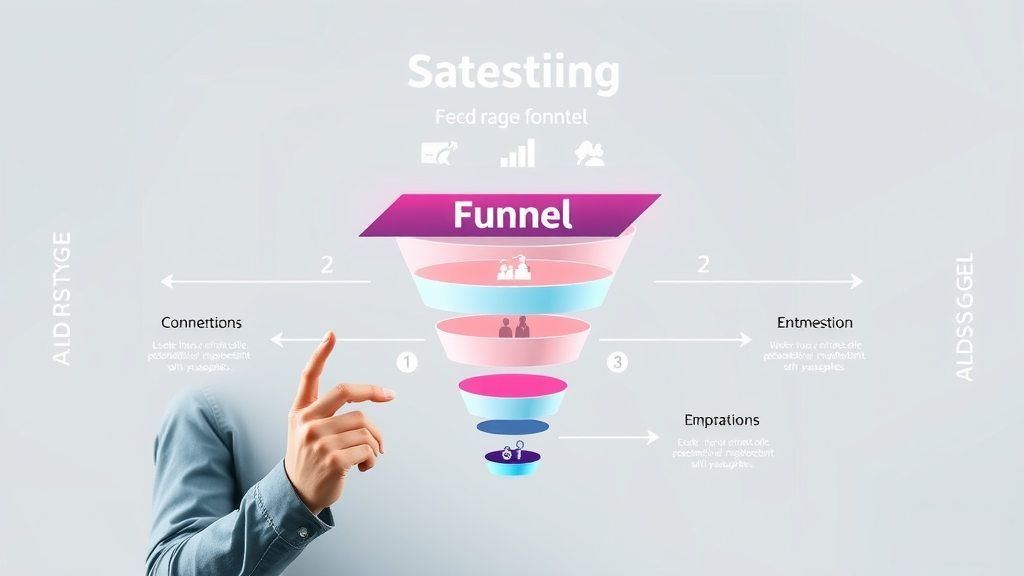
The sales funnel is a visual representation of the customer journey, outlining the steps a potential customer takes from first contact to final purchase. Understanding the roles of each funnel stage helps you tailor your marketing funnel strategies more effectively. Common funnel terms include lead generation (lead gen) , top of the funnel (awareness), middle of the funnel (consideration), and bottom of the funnel (conversion and loyalty).
Key to this process is recognizing the difference between qualified leads and prospective customers. Qualified leads are individuals who have shown intent and fit your target criteria, while prospective customers are those that might be interested but need more nurturing to progress through the sales process. Aligning tactics with each stage is essential for a seamless movement through the funnel toward becoming paying customers.
A well-structured sales funnel gives your sales team a clear roadmap for each interaction, allowing for more targeted outreach and improved conversion rates. By defining funnel concepts upfront, your business can better measure what works, test improvements, and customize touchpoints across the journey.
Overview of Sales Funnel Stages: Awareness, Consideration, Conversion, Loyalty
Funnel Stage |
Lead Activity |
Key Metrics |
|---|---|---|
Awareness |
Discovery, Education |
Impressions, Reach |
Consideration |
Engagement, Exploration |
Click-Through Rate, Time on Page |
Conversion |
Decision, Purchase |
Conversion Rate, Sales |
Loyalty |
Retention, Advocacy |
Repeat Purchases, Referral Rate |
Each funnel stage plays a unique role in the progression of leads. The awareness stage focuses on grabbing attention, while the consideration stage deepens the relationship through education. The conversion stage is where a potential customer becomes a paying customer, and finally, the loyalty stage nurtures ongoing advocacy and repeat business. Tracking metrics at each stage highlights where leads stall or disengage, guiding refinements for maximum impact.
Mapping the Modern Customer Journey: Maximizing Funnel Stages

Aligning Marketing Funnel Tactics With Each Funnel Stage
A successful customer journey requires strategic alignment between your marketing tactics and each funnel stage. In the awareness stage , broad-reaching content such as social media posts and blog posts grab attention. However, as leads enter the consideration stage , your focus should shift to deeper engagement: think detailed guides, case studies, and interactive tools. Further down, the conversion stage calls for targeted offers like free trials , product demos , and personalized emails crafted by your sales team.
Mistakes often occur when companies deploy the same content or tactics at every stage. Each touchpoint must resonate with the specific needs and intent of your target audience at that moment. Effective mapping ensures your potential customers are never left guessing what step to take next, reducing friction and increasing the likelihood of a seamless move through your marketing funnel.
Remember, your customer journey is not linear. With omnichannel digital touchpoints, leads might jump stages or repeat interactions before converting. Having a well-mapped journey with adaptable content keeps your company top of mind throughout the consideration and decision-making process.
Identifying Pain Points Along the Customer Journey
One of the most critical steps in optimizing how to move leads through a funnel is pinpointing and addressing pain points along the customer journey. These are the roadblocks or frustrations that cause potential customers to delay or abandon the process. Common examples include unclear calls to action, lack of information, lengthy forms, or irrelevant content at specific funnel stages.
Use data analysis, customer feedback, and conversion metrics to reveal exactly where leads are dropping off or stalling. Are visitors bouncing at the landing page ? Do your emails get ignored during the consideration stage ? Once identified, these pain points offer invaluable opportunities for targeted optimization, turning lost leads into real pipeline growth.
Pinpoint where leads drop off along the funnel
Assess which content resonates at each stage
Identify friction in your sales process
Regular reviews keep your sales funnel healthy and dynamic, ensuring a consistently optimized customer journey that outperforms the competition.
Lead Gen Excellence: How to Move Leads Through a Funnel Using Effective Lead Generation
Understanding Your Target Audience and Their Pain Points

An effective lead generation process starts with a deep understanding of your target audience : who they are, what motivates their decisions, and especially what pain points your solution can address. By mapping out buyer personas and documenting common challenges, your message and value proposition become exponentially more compelling at every funnel stage.
Engage directly with your audience through surveys, interviews, or feedback forms to gain authentic insights into what drives—or hinders—their purchase journey. Sharing relevant case studies and testimonials demonstrates that you understand their unique challenges, building instant credibility. By tailoring content and outreach to their identified pain points, you’ll guide more qualified leads into and through your sales funnel.
Top of the Funnel Lead Generation Strategies
The top of the funnel is where broad awareness and initial engagement are created. Here’s how to ensure your lead gen efforts capture the right attention:
Social media campaigns
Email campaigns
Landing pages
Content marketing (blogs, videos, guides)
Use targeted social media ads and timely posts to spark interest and direct traffic to high-converting landing pages. Well-crafted blog posts and educational videos position your brand as a trusted authority in your industry, motivating a potential customer to engage further. Email campaigns are another proven tactic, providing personalized content straight to inboxes and inviting readers to explore your product or service deeper.
Allocating resources to these proven lead generation strategies will keep your funnel healthy, full, and moving steadily toward conversion.
Creating Awareness: Strategies for the Awareness Stage of the Sales Funnel

Using Social Media and Content Marketing for Funnel Initiation
At the awareness stage , your mission is to make as many potential customers as possible aware that your solution exists. Social media platforms, such as LinkedIn, Facebook, and Instagram, enable broad and cost-effective reach. Regular posting, engaging stories, interactive polls, and collaborations with influencers can drive huge traffic into the top of the funnel.
Meanwhile, content marketing strategies such as insightful blog posts, downloadable guides, and infographics help position your brand as the answer to urgent customer questions. This educational approach gradually warms up cold leads, encouraging your audience to take that next step toward the consideration stage.
Video content has emerged as a dominant driver at the awareness stage. Quick explainer videos, customer testimonials, or product walkthroughs capture attention and encourage sharing across channels. Not only do videos create more impressions, but they also build emotional resonance. Embed video stories in landing pages and social posts to humanize your brand and differentiate it from competitors.
Making compelling, visually engaging content a centerpiece of your funnel initiation efforts ensures more leads and a more qualified sales funnel from the outset.
Nurturing With Precision: Guiding Leads in the Consideration Stage

Personalized Email Campaigns and Automated Nurturing Sequences
Once leads have entered the consideration stage , success hinges on ongoing, tailored communication. Email campaigns that are personalized with dynamic content, recommendations, and relevant offers can accelerate the nurturing process. Marketing automation tools allow you to create segmented nurturing sequences, sending the right message at exactly the right time to keep leads engaged and moving closer to conversion.
For instance, use behavior-triggered emails to respond when a lead gen form is completed or when a content piece is downloaded. Each interaction should acknowledge previous actions and gently guide towards a decision, ensuring your messaging aligns with the evolving needs of each qualified lead.
Strong automation does not mean losing the human touch. Use the data collected to refine the experience for your target audience , making each email feel like a thoughtful response to their unique journey.
Educating Leads: Answering Pain Points and Building Trust
Education is a powerful conversion driver during the consideration stage. By addressing your prospects’ pain points head-on, you effectively dismantle objections and build trust. This can be achieved with in-depth whitepapers, well-produced webinars, comparison sheets, and timely newsletters that highlight successful case studies.
Utilize a consultative approach: don’t just push your product or service, but rather guide the prospective customer by clarifying how your solution resolves their unique challenges. When your content, whether a blog post or a direct email, consistently answers the concerns of your target audience , you become the trusted advisor rather than just another vendor.
Converting Opportunities: Best Practices for Bottom of the Funnel Success
Landing Page Optimization and Persuasive Calls to Action

The bottom of the funnel is where the rubber meets the road. Here, landing page optimization is critical; every headline, image, and call to action must be constructed to minimize friction and maximize conversion rate. Effective landing pages are clear, visually compelling, and directly aligned with the expectations created during the nurturing process.
Strong CTAs—such as “Start Your Free Trial” or “Book a Product Demo”—should be above the fold and repeated strategically down the page. Use persuasive, benefit-rich copy to move prospects off the fence, and back up every claim with social proof such as testimonials and case studies. Optimize forms for speed and mobile experience, since potential customers are likely to interact from a variety of devices.
How Your Sales Team Moves Leads Through the Sales Pipeline
No sales funnel is complete without a highly trained and agile sales team. At the bottom of the funnel , sales representatives must quickly respond to inbound queries, provide personalized consults, and remove any barriers to purchase. Coordinating the handoff between marketing automation tools and human intervention ensures that qualified leads are never left unattended in the sales pipeline.
Regular pipeline reviews, collaborative meetings, and real-time updates are essential for identifying “stuck” opportunities and crafting action plans. Effective teams close more deals by addressing last-minute objections swiftly and demonstrating the real-world value of your product or service during product demos or live consults.
Watch this quick case study for inspiration:
Case Study: A Real-World Example of Moving Leads Through a Funnel to Conversion
Measuring and Refining Every Funnel Stage for Increased Sales Conversion
Tracking Metrics at Each Funnel Stage
Stage |
KPIs to Monitor |
|---|---|
Awareness |
Website visits, New leads |
Consideration |
Email open rates, Social engagement |
Conversion |
Deal closure rate, Average deal size |
A data-driven approach to how to move leads through a funnel means setting clear KPIs at every stage. By consistently monitoring conversion rates , email performance, and the ROI tied to each sales funnel activity, you can swiftly spot underperforming tactics. Tracking enables you to double down on successful strategies and ditch the ones that drain resources with little return.
Teams that regularly review their sales pipeline find it easier to allocate budget, identify high-value content (like case studies or product demos), and ensure high-performing landing pages are featured front and center.
Optimizing the Customer Journey Using Data and Feedback

Experiment with messaging
Refine your ideal customer profile
Utilize A/B testing for landing pages and CTAs
Experimentation is at the heart of continuous improvement when it comes to how to move leads through a funnel. Test messaging across segments, adjust your value propositions, and measure audience reactions. Use A/B testing on key landing pages, forms, and emails to discover which variations drive the highest conversion rates at each funnel stage.
Gathering customer feedback post-purchase—or even from lost opportunities—yields powerful insights about where the journey can be smoothed and what additional pain points need to be tackled. In doing so, your funnel becomes a living, evolving asset.
"The best marketing doesn’t feel like marketing." – Tom Fishburne
Empowering Your Sales Team: Boosting Funnel Movement and Collaboration
Aligning Marketing and Sales Teams for Seamless Funnel Progression

Alignment between marketing and sales is the backbone of a frictionless sales funnel. Regular collaboration ensures that every campaign, piece of content, and nurturing sequence is built with unified messaging and shared goals. By aligning on what a qualified lead looks like and coordinating handoffs, both teams can deliver a superior customer journey.
Joint sales pipeline reviews enable departments to celebrate wins together, quickly spot bottlenecks, and proactively adjust tactics. This collaborative spirit improves morale and directly translates into higher conversion rates, as no lead gets left behind.
Implementing Real-Time Sales Pipeline Reviews
Set regular sales team check-ins
Review pipeline performance
Identify stuck leads and create action plans
Real-time tracking of your sales pipeline means issues are spotted before they snowball. Whether through weekly standup meetings, dashboards, or CRM notifications, the key is quick action. Discussions should focus on the status of leads at every funnel stage, the effectiveness of current nurturing activities, and the performance of each sales team member.
This ongoing vigilance guarantees that no lead languishes unnoticed, and your sales process is always operating at peak efficiency.
Upgrading Your Funnel: Tools and Technology to Move Leads Efficiently
Marketing Automation Platforms for Funnel Management

Modern lead generation and funnel management rely on advanced marketing automation platforms. Tools like HubSpot and Mailchimp streamline repetitive tasks, manage segmented lists, deliver personalized email campaigns, and track engagement across all funnel stages. The result? Sales teams save time and focus on high-value interactions while marketing can deliver custom content with precision.
Choosing a platform equipped with analytics, A/B testing, and robust workflow builders brings greater clarity and control to your entire marketing funnel —from the first touch to the final sale.
Leveraging CRM Solutions for Customer Journey Insights
Tool Name |
Key Feature |
Best For |
|---|---|---|
HubSpot |
Marketing Automation |
Lead nurturing |
Salesforce |
CRM & Analytics |
Pipeline management |
Mailchimp |
Email Campaign Automation |
Awareness & Consideration Stages |
CRMs like Salesforce give your sales and marketing teams a single source of truth. Track the exact journey each lead takes, measure campaign ROI, and prioritize opportunities for follow-up. When CRM data is properly leveraged, cross-functional teams can act quickly and confidently—ensuring leads keep moving efficiently toward the close.
Integrations with chatbots, lead scoring, and real-time insights make CRMs the nerve center for both capturing and capitalizing on every sales funnel opportunity.
Evaluating Technology ROI on Every Funnel Stage
Adopting new technologies should directly improve pipeline progression and sales growth. Always track the return on investment (ROI) of each tool at every funnel stage—does your marketing automation reduce lead response times? Does your CRM increase conversion rates ? Use hard data from your own team and industry benchmarks, ensuring you’re investing in solutions that drive measurable improvements in how you move leads through a funnel.
Continual evaluation prevents tech bloat and reinforces a laser-like focus on systems and features that directly impact your closing rates.
People Also Ask: How to Create a Funnel for Leads?
Answer: Building Your Lead Funnel From Awareness to Loyalty
To create a funnel for leads, start by raising brand awareness with compelling content (social media, blogs) at the top. Guide engaged leads into the consideration stage with nurturing emails and targeted resources. Move them to conversion with persuasive offers and a seamless sales process. Finally, foster loyalty through follow-up communications, customer support, and referral incentives, ensuring your new paying customers become long-term advocates.
People Also Ask: What Are the 5 Stages of the Sales Funnel?
Answer: Awareness, Interest, Consideration, Intent, Purchase
The 5 stages of the sales funnel are: Awareness (attract attention), Interest (generate curiosity), Consideration (evaluate options), Intent (signal readiness to buy), and Purchase (complete the transaction). Each stage requires distinct strategies and touchpoints for moving leads closer to a sale.
People Also Ask: What Are the 4 Steps of the Marketing Funnel?
Answer: Awareness, Consideration, Conversion, Advocacy
The 4 core steps of the marketing funnel include: Awareness (initial exposure), Consideration (exploring solutions), Conversion (buying decision), and Advocacy (customer becomes a brand ambassador). Optimizing these steps facilitates the smooth movement of leads, resulting in more conversions and greater lifetime value.
People Also Ask: What Is the Lead Funnel Format?
Answer: Structured Movement From Top of the Funnel to Bottom of the Funnel
A lead funnel format is a structured sequence that guides prospects from the top of the funnel (broad awareness campaigns) through the middle stages (education and nurturing), down to the bottom (closing sales and creating loyal customers). This ensures all leads are engaged and encouraged toward a successful outcome.
Frequently Asked Questions on How to Move Leads Through a Funnel
How often should I review lead funnel metrics?
Review metrics at least monthly, but weekly or even daily reviews offer more agile adjustments. Real-time analyses help spot underperforming stages and make necessary changes before leaks become significant loss points.What are the most common mistakes in lead generation?
Common pitfalls include lack of audience research, unclear calls to action, generic messaging at every funnel stage , and slow follow-up by the sales team. Ensuring segmented communication and consistent tracking solves many of these issues.How do I personalize my sales funnel for different buyer personas?
Create multiple buyer personas based on data and segment your nurturing content accordingly. Use dynamic emails, targeted ads, and unique landing pages to serve relevant messaging to each persona at every funnel stage.What is the difference between a marketing funnel and a sales funnel?
The marketing funnel focuses on attracting, educating, and nurturing leads, while the sales funnel narrows in on converting interested prospects into paying customers through offers, demos, negotiations, and contract closures.
Elevate Results: Recap of How to Move Leads Through a Funnel and Achieve Sales Growth
Master each sales funnel stage for maximum conversion
Leverage technology to automate and measure success
Empower your sales team to uncover and overcome bottlenecks
Focus on customer journey optimization at every touchpoint
Take Action: Schedule a Free Strategy Session Today!
Ready to accelerate revenue and close more deals? Schedule a Free Strategy Session Today!
To enhance your understanding of moving leads through a sales funnel and closing more sales, consider exploring the following resources:
“Lead funnel: How to build it, definition, and stages” : This article provides a comprehensive guide on constructing an effective lead generation funnel, detailing each stage and offering practical steps to optimize the process. ( zendesk.com )
“5 Top Conversion Funnel Tips for SMBs” : This piece offers actionable tips for small and medium-sized businesses to improve their conversion funnels, including setting clear success metrics and leveraging technology for efficient funnel management. ( pipedrive.com )
By delving into these resources, you’ll gain valuable insights and strategies to effectively guide leads through your sales funnel, ultimately boosting your conversion rates and sales performance.




Write A Comment