


Are you ready to triple your conversion rates? Studies show that businesses using structured lead generation funnels can boost their conversion rates by up to 300% compared to those flying blind. With today’s digital landscape more crowded than ever, knowing how to build a lead generation funnel that delivers fast is not just smart—it's necessary. Whether you're a seasoned marketer or just starting out, mastering this essential strategy is your ticket to more qualified leads, better sales opportunities, and a thriving business.
Unlocking Fast Results: The Surprising Truth Behind How to Build a Lead Generation Funnel
"Did you know that businesses implementing structured lead generation funnels increase conversion rates by up to 300%?"

- Proven frameworks for rapid lead gen
- Step-by-step strategies to launch your own generation funnel
- Actionable lead funnel tips for social media, email marketing, and more
- Key metrics for optimizing your sales funnel’s conversion rate
If you want to see quick wins and sustainable growth, understanding how to build a lead generation funnel tailored for speed is the first step. The real secret isn’t just about attracting potential customers—it’s about moving them swiftly from initial interest to paying customer using a proven framework. In this guide, you'll uncover concrete ways to drive traffic, engage your target audience, and convert those leads using battle-tested techniques from high-performing marketers.
Understanding the Basics: What Is a Lead Generation Funnel?
Defining a Lead Generation Funnel and Its Core Purpose
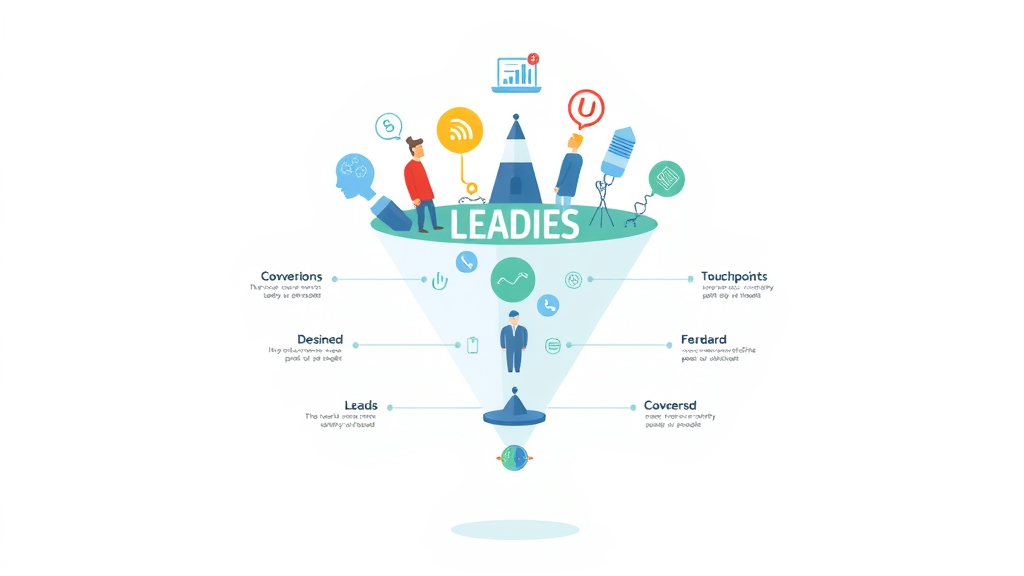
A lead generation funnel is a strategic process that guides potential customers—also known as leads—from their first encounter with your brand to becoming paying customers. This isn't just a sales process; it's an orchestrated journey shaped by your lead magnets, content, landing pages, and nurturing tactics. The core purpose of a lead gen funnel is to capture the interest of your target audience, collect vital contact information like email addresses, and warm up these leads until they’re ready for a purchase or a direct conversation with your sales team.
The structure of a successful generation funnel typically includes attracting potential customers through valuable offers (lead magnets), engaging them with targeted content, and converting them into qualified leads via effective landing pages. With the right setup, you can systematically grow your list of qualified prospects while laying a foundation for scalable, repeatable sales. In essence, learning how to build a lead generation funnel opens the door to predictable business growth, even when you’re sleeping.
It’s vital not just to build any funnel—but to craft one that aligns with your ideal customer’s journey. That means understanding the difference between marketing efforts designed simply to “generate leads” versus those that also nurture, qualify, and prime those leads for your sales team or product offer.
Key Differences: Lead Generation, Lead Funnel, and Sales Funnel
Confusion often arises between lead generation , lead funnel , and sales funnel —but knowing the differences can make or break your marketing strategy. Lead generation refers to all activities designed to generate leads by capturing the interest of potential customers, often through tactics like content marketing, social media, or advertising. The lead funnel is the structure built specifically to move those leads toward a deeper level of engagement, such as filling out their contact info or responding to a lead magnet.
Meanwhile, a sales funnel goes one step further. After leads are qualified through your generation funnel, they move down the sales funnel, where your sales team nurtures them toward conversion and long-term value as paying customers. Each funnel has a distinct focus: lead generation is about getting attention, the lead funnel is about lead capture and qualification, and the sales funnel is all about closing the deal. Integrating these funnels for a seamless prospect journey is crucial for maximizing your conversion rate and ROI.
| Feature | Lead Generation Funnel | Sales Funnel | Lead Funnel |
|---|---|---|---|
| Purpose | Attract and capture potential customers | Qualify and convert leads into paying customers | Move leads from initial interest to qualification |
| Stages | Awareness, Interest, Lead Capture | Consideration, Decision, Purchase | Engagement, Nurturing, Qualification |
| Key Outcomes | Contact info, lead magnets collected | Deals closed, new customers acquired | Qualified leads for the sales team |
Essential Elements: Components of a High-Converting Lead Generation Funnel
Capturing Attention: Target Audience and Lead Magnets

Every high-performing lead generation funnel begins with crystal-clear knowledge of your target audience . Defining your ideal customer—through data, research, and real-world observation—ensures that every lead magnet, landing page, and email in your funnel aligns with their needs and pain points. A lead magnet is a valuable resource (like a checklist, eBook, webinar, or free trial) you offer in exchange for a prospect’s contact info. The more tailored your lead magnets are to your audience, the higher your lead capture and conversion rates will be.
Don’t skimp on research! Understanding demographic trends, pain points, and desires helps you stand out among businesses vying for your audience’s attention. Segmenting your audience allows for hyper-personalized marketing efforts, from relevant landing pages to automated email nurturing. Whether you’re selling a product or service, you need to get the right message to the right people at the right time—and that starts with defining and speaking directly to your target audience.
Remember, your lead magnets should feel irresistible. If your resource is generic, your results will be too. Invest time in creating lead magnets so enticing, your prospects feel like they’re getting insider secrets just by entering their email address.
Landing Pages That Work—Designing for Maximum Conversion Rate

Your landing page serves as the gateway between your marketing efforts and your lead generation results. To maximize your conversion rate , design your landing pages with a singular focus—removing every distraction that could pull attention away from your lead magnet or call to action. Effective landing pages showcase a clear headline, concise benefits, visually engaging elements, and a simple form for capturing contact information, such as an email address.
Great landing pages aren’t just about aesthetics—they guide your potential customer toward an action with psychological cues like urgency, trust badges, and testimonials. Test your copy and visuals regularly to see what resonates most with your audience. Use contrasting colors for call-to-action buttons and minimize the number of fields in your form for greater lead capture success. Remember, your landing page must always deliver a clear, immediate answer to this question: “Why should I give you my info?” If your answer isn’t obvious, tweak the value proposition until it is.
Investing in a user-friendly, mobile-optimized landing page can double your conversions overnight. Regular A/B testing, mobile responsiveness, and lightning-fast load times can spell the difference between qualified leads and missed opportunities.
Nurturing Leads: Email Marketing and Automated Follow-Ups

Lead capture is only the first step. To transform cold leads into qualified leads and eventually paying customers, a well-structured email marketing and follow-up sequence is critical. Automated email workflows keep your leads engaged with valuable, relevant content—building trust, answering objections, and educating them about your product or service. Personalize your emails to reflect the interests and stage of each prospect in your generation funnel.
Set up a series of well-timed emails, each with a clear goal: welcoming the lead, providing deep dives into your lead magnet, sharing success stories, and inviting the lead to a free trial or demo. Use strong subject lines and engaging copy to maintain high open and click-through rates. Reporting tools in modern CRMs let you track engagement, so you can see which emails move prospects toward action. Never underestimate the power of timely, consistent communication in nurturing your leads throughout the funnel.
Finally, combine your email marketing with intelligent automation—such as triggers based on lead behavior, segmentation, and tailored recommendations—to boost your funnel's efficiency and ROI. The businesses that master this see sustainable improvements in both lead quality and volume.
Optimizing the Generation Funnel for Fast Results
The difference between a sluggish lead funnel and a rapid-fire generation funnel is relentless optimization. To build a lead generation funnel that delivers immediate results, monitor and refine each element—from ad copy and landing pages to email sequences—using data-driven decisions. Leverage analytics tools to identify which parts of your funnel have the highest drop-off rates, and prioritize improvements starting from the top (traffic sources) to the bottom (conversion points).
Explore A/B testing for landing pages, calls-to-action, and even subject lines of your nurture emails. Review your funnel metrics daily or weekly to spot bottlenecks and tweak your approach in real time. The fastest-growing companies iterate faster than their competitors, always seeking to squeeze more performance out of every generation strategy. Rapid optimization is the secret weapon that separates average marketers from industry leaders.
Another technique is to double down on what’s working. If a particular channel—such as social media or a specific lead magnet—is consistently driving quality leads, amplify those marketing efforts. Similarly, cut tactics that underperform. Efficient, ongoing optimization is the fastest route to consistently high conversion rates and business growth.
Step-by-Step Guide: How to Build a Lead Generation Funnel from Scratch
- Identifying your target audience and buyer personas
- Crafting irresistible lead magnets
- Setting up high-performing landing pages
- Driving traffic through social media and paid ads
- Building automated email marketing sequences and workflows
- Analyzing and optimizing for ongoing improvement
Let’s take the process of how to build a lead generation funnel step by step. First, identify your target audience using research and persona creation. Next, develop lead magnets that speak to their most pressing challenges or desires. With compelling offers crafted, create conversion-focused landing pages where your prospects can exchange their contact info for value.
To drive traffic to these pages, combine organic and paid channels—such as social media, search ads, and content marketing—ensuring your funnel is always full. Set up automated email marketing to nurture leads, delivering value and guiding them toward your sales team or purchase page. Finally, monitor key metrics, collect feedback, and fine-tune your funnel continuously for better results. This cycle never stops—ongoing analysis and optimization are crucial for maintaining a high-performing lead generation system.
By following this blueprint, you’ll be able to transition more potential customers into qualified leads and ultimately, into paying customers more quickly than ever before.
Quick Start Checklist: Must-Haves Before Launching a Lead Funnel

- Crystal-clear target audience profile
- Value-packed lead magnets ready to deploy
- Mobile-optimized, conversion-focused landing pages
- Traffic-driving campaigns—social media, SEO, paid ads
- Automated email nurture sequences
- Tracking and analytics set up to measure conversion rates
| Task | Responsible Party | Tools Needed |
|---|---|---|
| Create buyer personas | Marketing Team | Survey Tools, Analytics |
| Develop lead magnets | Content Team | Design Software, Copywriting Tools |
| Design landing pages | Web/Design Team | Landing Page Builders |
| Set up traffic campaigns | Marketing Team | Ad Platforms, Social Schedulers |
| Build email workflows | Email Marketer | CRM, Email Automation Tools |
| Install analytics tracking | Tech Team | Google Analytics, Heatmaps |
Boosting Performance: Measuring and Optimizing Lead Generation Funnels
Key Metrics: Conversion Rate, Cost Per Lead, and ROI

To ensure your lead generation funnel is driving real business growth, you must track critical performance metrics. The conversion rate shows what percentage of visitors become leads, while cost per lead tells you how much you’re spending to acquire each prospect. Calculate ROI by comparing the revenue generated from your lead gen efforts with the total costs invested in your funnel. Regularly reviewing these numbers helps you spot inefficiencies and double down on what works.
Break down conversion rates for each stage in your funnel—landing pages, lead magnets, and email sequences—to pinpoint where prospects may be falling off. If your cost per lead is high, revisit your traffic sources and messaging. The ultimate goal is to maximize qualified leads while keeping your costs predictable and scalable. By continually optimizing for these key metrics, you drive the greatest impact on your bottom line, making your generation funnel a true business asset.
With granular tracking and reporting from most CRMs and analytics platforms, it’s easier than ever to visualize success and make faster, more informed marketing decisions across the board.
A/B Testing and Ongoing Optimization Strategies
Consistent split testing—also known as A/B testing —is the secret to perpetual improvement in your lead funnel. Experiment with different headlines, images, calls to action, and email subject lines to determine which variations maximize engagement and conversions. Document each test result, and make incremental changes based on data, not guesswork. This analytic approach to marketing ensures your funnel remains agile and ready to adapt to changes in user behavior or market trends.
Adopt a culture of “test and tweak.” Schedule regular funnel reviews, use heatmaps to understand page behavior, and gather user feedback to identify friction points in your funnel flow. Next, double down on winning elements and quickly retire those that don’t move the needle. Over time, these incremental gains add up—transforming your funnel into a lead-gen machine that continually outperforms the competition.
"Continuous testing is the backbone of every high-converting lead generation funnel."
Case Study: How a Small Business Doubled Their Leads in 30 Days

To bring this blueprint to life, let’s examine a real-world example. One small software company implemented the lead funnel strategies outlined above—focusing on a single, value-packed lead magnet, refocusing their social media ads to drive traffic to a streamlined landing page, and investing in a simple, automated email follow-up. Within 30 days, their lead conversion rate soared, and they doubled their number of qualified leads compared to the previous month.
The secret? Relentless testing, refining the landing page headline until their audience clicked, and nurturing new contacts with genuinely helpful email marketing content tailored to common pain points. Each email prompted prospects to take the next step, whether it was watching a product demo or scheduling a free trial. The result was an exponential increase in engaged, sales-ready leads, and a lower overall cost per lead. This proves that with the right approach, any business can accelerate growth through a smart lead generation funnel.
Advanced Tactics: Turbo-Charging Your Generation Funnel

- Multi-channel retargeting
- Personalization and dynamic content in emails
- Integrating chatbots and automated scheduling
- Leveraging social media influencers for lead funnel expansion
To take your lead generation funnel to the next level, embrace multi-channel retargeting —using ads and content to keep prospects engaged across social media, email, and web. Dynamic personalization in emails, powered by behavioral triggers, can yield marked improvements in conversion. Integrating chatbots on key landing pages shortens response time and qualifies prospects instantly.
Don’t overlook the power of partnerships and influencers in your space. Enlist respected social media personalities to introduce your brand and funnel offers to a larger, engaged audience. Automation platforms and AI tools can help scale these efforts while maintaining the personalized touch today’s consumers expect. By continuously experimenting with these advanced lead gen strategies, growth-minded businesses seize new opportunities for accelerated lead capture and sales pipeline growth.
People Also Ask: How to Build a Lead Generation Funnel
How to create a funnel for lead generation?
To create a funnel for lead generation , first identify the needs and pain points of your target audience, then create an irresistible lead magnet tailored to them. Build optimized landing pages where prospects exchange their contact info for your lead magnet. Drive traffic to these pages via social media, ads, or SEO, and nurture every lead with automated email marketing. Analyze performance and refine each stage for increased conversions and a seamless user journey.
How to build a funnel step-by-step?
Start by researching and segmenting your ideal customer, followed by crafting specific lead magnets to attract them. Set up dedicated landing pages for each offer, ensuring clarity and minimal distractions. Use diversified traffic sources—like email, social platforms, and paid ads—to fill your funnel, then nurture your leads with well-timed emails and content. Monitor funnel metrics closely and continuously optimize for higher efficiency and conversion rates.
What is the difference between a funnel and a lead generation?
Lead generation involves the tactics used to find and attract new prospects, such as content marketing or ad campaigns. A funnel refers to the structured journey these prospects follow—from awareness to interest and ultimately conversion—using landing pages, lead nurturing, and sales processes. In short, lead generation fills the funnel, while the funnel guides leads towards becoming paying customers through methodical, step-by-step engagement.
What are the stages of the lead generation funnel?
The main stages are: 1. Awareness (introducing your brand or offer), 2. Interest (engaging with lead magnets or content), 3. Lead Capture (collecting contact info via forms), 4. Nurturing (providing value through emails and automated messaging), and 5. Qualification/Conversion (moving leads to sales readiness and closing the deal).
Expert Insights: Common Mistakes to Avoid When Building a Lead Generation Funnel
- Neglecting audience research
- Skimping on landing page design
- Weak or generic lead magnets
- Poor follow-up and lead nurturing processes
- Ignoring funnel analytics and optimization
"A lead generation funnel is not 'set-and-forget.' Constant attention is required for lasting results."
Many marketers make avoidable errors: skipping detailed audience research, investing little in design, and treating lead nurturing as an afterthought. Generic lead magnets and poor analytics implementation also sabotage results. To succeed, regularly review your funnel’s effectiveness, embrace feedback, and treat every touchpoint as an opportunity for optimization. Consistent improvement transforms a basic funnel into a revenue-driving engine.
Remember, what works today may not work tomorrow—the highest converters are those who constantly update their processes, design, and messaging based on data and real customer feedback.
Frequently Asked Questions About How to Build a Lead Generation Funnel
- Q: How do I measure the success of my lead generation funnel?
- A: Monitor key metrics such as conversion rate, cost per lead, qualified leads generated, and ROI. Regular analysis ensures your funnel remains optimized and effective.
- Q: What’s the best way to automate my lead funnel?
- A: Use CRM and email marketing automation tools to deliver timely, segmented follow-up and eliminate manual tasks, ensuring every lead receives personalized attention throughout the funnel.
- Q: How often should I test and update my funnel?
- A: Implement A/B testing on a rolling basis, with monthly or quarterly reviews of performance data to identify and act on opportunities for improvement.
- Q: Can I use multiple lead magnets in my funnel?
- A: Absolutely. Offering a variety of tailored lead magnets for different audience segments increases your reach and conversion potential considerably.
- Q: What’s the typical ROI on a well-designed lead generation funnel?
- A: ROI varies, but most businesses see triple-digit growth when funnels are carefully designed, tested, and scaled. Fast action and persistent refinement are key to achieving the best results.
Action Plan: Launch Your Lead Generation Funnel for Immediate Results
- Apply the proven processes discussed above
- Leverage marketing automation to scale
- Schedule a Free Strategy Session Today!
Key Takeaways from Building a Lead Generation Funnel That Converts Fast
- Methodical planning drives conversions
- The best generation funnels blend content, design, nurturing, and analytics
- Speed to launch + optimization sets winners apart
References, Tools & Further Reading—Lead Generation Funnel Success
- Explore CRM and email automation platforms for streamlined lead nurturing.
- Read industry blogs on conversion rate optimization and A/B testing.
- Consult analytics tools like Google Analytics for funnel performance insights.
- Join marketing forums to stay updated on the latest lead gen strategies.
Take action now—implement a structured lead generation funnel today and watch your conversions soar.
To enhance your understanding of building an effective lead generation funnel, consider exploring the following resources:
-
“How to Build & Optimize Your Lead Generation Funnel” ( visme.co )
-
“How to Build a Lead Generation Funnel in 5 Steps” ( optimizepress.com )
These articles provide comprehensive insights and actionable steps to help you create a lead generation funnel that converts efficiently.




Write A Comment